- Prevent Cross-Contamination
Ayurvedic medicines often contain herbal powders, oils, and fermented liquids, which can have strong odors or residues.
These may contaminate Allopathic medicines (especially tablets and powders) if stored together, affecting purity and stability. - Regulatory Compliance
Most drug regulatory authorities (e.g., CDSCO in India) recommend or mandate segregation of traditional and modern medicines to ensure proper inventory, storage, and audit compliance.
Helps in easier tracking of expiry, batch numbers, and recalls separately for each category. - Different Storage Requirements
Ayurvedic medicines often require traditional containers, protection from moisture, or special handling (e.g., for Bhasmas or Asavas).
Allopathic medicines might need temperature-controlled or light-sensitive storage, especially injectables or biologics.
Separation allows for customized environmental control. - Inventory Management
Segregated storage helps in clear categorization, faster dispensing, and avoids confusion between similarly named products (e.g., Triphala vs. Tramadol).
Reduces risk of dispensing errors, especially in busy pharmacies. - Avoid Drug Interactions and Safety Risks
Some patients take both Ayurvedic and Allopathic medicines. Accidental co-packaging or misplacement could lead to dangerous drug interactions.
Keeping them separate emphasizes the need for professional guidance before mixing therapies.
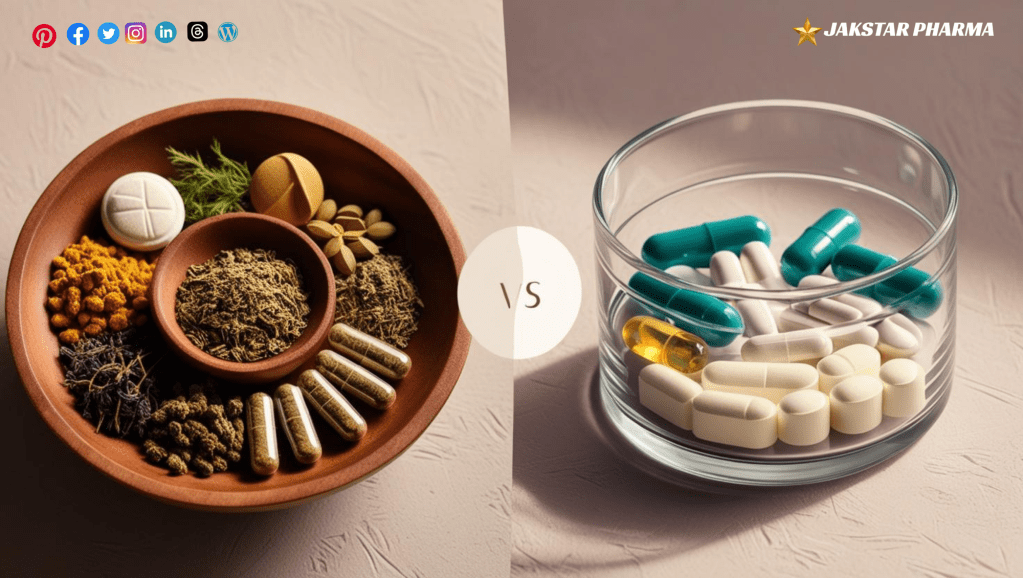
The Storing Ayurvedic and Allopathic medicines separately is essential for:
A)Safety
B)Regulatory compliance
C)Quality control
D)Efficient operations
E)Prevention of dispensing errors.
Regards,
JAKSTAR PHARMA
 JAKSTAR TOOLS