Clinical Evidence of Leukopenia Induced by SMX-TMP
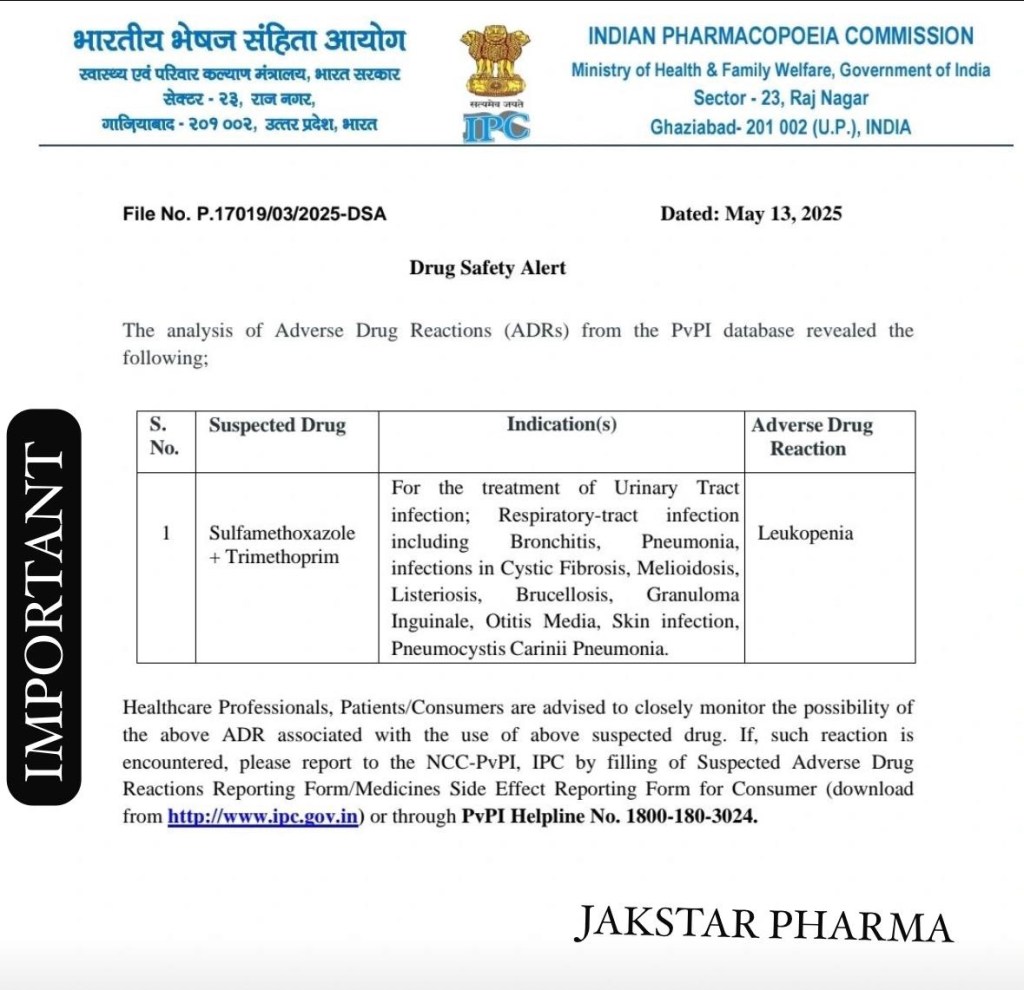
Leukopenia is a known adverse effect of SMX-TMP. Studies and case reports have documented instances where patients developed leukopenia following the administration of this antibiotic combination. For example, a case report detailed a patient who developed severe pancytopenia (a reduction in all blood cell types, including leukopenia) after receiving SMX-TMP. Upon discontinuation of the drug, the patient’s blood counts improved, indicating a direct association between the drug and the hematological adverse effect.
PMC
Another study found that patients with pre-existing conditions, such as HIV infection, were particularly vulnerable to drug reactions, including leukopenia, when treated with SMX-TMP. The study emphasized the need for vigilant monitoring during treatment to detect and manage such adverse reactions promptly.
Recommendations for Healthcare Providers
In light of the PvPI alert and existing clinical evidence, healthcare providers are advised to:
Monitor Blood Counts: Regularly check complete blood counts, especially in patients with underlying health conditions or those on prolonged SMX-TMP therapy.
Assess Risk Factors: Identify patients at higher risk for hematological adverse effects, such as those with renal impairment, HIV infection, or a history of bone marrow suppression.
Educate Patients: Inform patients about the signs and symptoms of leukopenia, including increased susceptibility to infections, and advise them to seek medical attention if such symptoms occur.
Adjust Treatment Plans: Consider alternative antibiotics for patients with known hypersensitivity to SMX-TMP or those who have experienced previous adverse reactions.
By adhering to these recommendations, healthcare providers can mitigate the risks associated with SMX-TMP and ensure patient safety.
Regards,
JAKSTAR PHARMA,
Your Trusted Healthcare Partner.
 JAKSTAR TOOLS